Leipzig, Germany, has stood at the crossroads of trade for centuries. Its history as a connector of people, ideas, and culture still resonates in its museums, music halls, kitchens and cafes. Beyond the city, the Saxony region boasts a spa culture and artisanal traditions that promise to astound you.
This article might contain affiliate links. Read the disclaimer about affiliate links & PR gifting here.
The writer was hosted by Leipzig Tourism, which did not review or approve this story.


Left: Auerbach’s Cellar under the roof of the Mädler Passage; image courtesy of Leipzig Tourism. Right: Bach Monument in Thomaskirchhof; image © courtesy of Leipzig Tourism.
Explore
Start in The Markt, the city’s historic heart, and visit Leipzig’s Renaissance-style Altes Rathaus (Old Town Hall), now home to the Museum of City History. Head to Mendelssohn House for a glimpse into the composer Felix Mendelssohn’s life and works, and the Bach Museum in St. Thomas Square, which features 12 exhibition rooms dedicated to the other famous German composer. Across from the museum, St. Thomas Church is a Romanesque-Gothic gem dating back to the 13th century. Bach, who served as Cantor of St. Thomas School, is also buried there, directly in front of the altar. Pro tip: Pay your respects, then stay for a free performance by the church’s Boys’ Choir, considered to be one of the best choir performances in the country.


St. Nicholas Church is not only a major Romanesque-Gothic-Baroque-Newclassical-style place of worship, but was the city’s main meeting point for peaceful Monday Demonstrations against the East German government between 1989 and 1991. The Museum in Der Runden Ecke (Museum of the “Round Corner”) offers a fascinating look into the Stasi (East German secret police), while the Grassi Museum is home to three museums: the Ethnography Museum, the Musical Instruments Museum, and the Applied Arts Museum. All of which combine forces to display more than 200,000 pieces of both European and international artisanship dating back to antiquity. Outside of the city centre, the Monument of the Battle of the Nations – the largest monument in Europe – commemorates the 1813 defeat of Napoleon’s army in Leipzig, and is worth the trip.
Take a load off at Zoo Leipzig, and visit its six themed worlds, including wonderous Gondwanaland, where tropical rainforests – complete with jungle paths, exotic animals and different plant species – will enthral you. In town, enjoy an acoustically brilliant performance at Leipzig’s famous Gewandhaus in Augustusplatz, the city’s third great concert hall. Leipzig’s first Gewandhaus in 1781 witnessed landmark works, including the premiere of Beethoven’s Piano Concerto No. 5, Schubert’s Great Symphony, Mendelssohn’s Violin Concerto, and Brahms’ A German Requiem. Cap off the day atop Panorama Tower for a drink and stellar city views.


Zoo Leipzig. Images by Lara John and Simon Infanger.
Eat
You can’t come to Leipzig and miss Auerbachs Keller, located below the Mädler Passage. A wine bar hotspot since the 16th-century, this visually stunning 500-year-old restaurant gained international fame through Goethe’s play Faust, where Mephistopheles brings Faust during his travels. Visitors are encouraged to explore the restaurant’s historic dining rooms and enjoy classic Saxon fare.
Leipzig’s eight Michelin restaurants cater to those eager to savour the city’s fine dining scene. Of the eight, three have earned a one Michelin star. Kuultivo prides itself on an ever-evolving, locally-inspired menu paired with dynamic wines, while Frieda’s eclectic dishes, such as ‘saddle’ of venison, salted celeriac, artichoke cream, pistachio, and lardo, have made a lasting impression. Petra and Detlef Schlegel’s Stadtpfeiffer has been an elegant, French-inspired mainstay since 2001.

As for imbibing, visit Gosenschenke, home to one of Saxony’s most beautiful beer gardens, and enjoy a glass of sour Leipziger Gose beer. So popular and beloved, the city is also known as “Gosestadt,” and plays host to the annual Gose Day on November 17th. Try the Magic Monkey and Pornstar Milk-Tinii at Imperii. Not only does this bar serve creative cocktails, it does so in Leipzig’s oldest trading house, drawing inspiration from the city’s history as a crossroads of commerce and trading powerhouse.
It may come as a surprise, but Leipzig’s passionate coffee culture goes back centuries. After all, it’s said that Bach himself frequently visited Cafe Zimmermann – the city’s largest coffee house in the 18th century – even using it as the backdrop for his cantatas, including his Coffee Cantata. Today, Kaffeehaus Riquet is easily one of the most coveted and recognisable addresses for a relaxing cup of coffee. Combining Art Nouveau with Chinese architecture, this former commercial building has two copper-embossed elephant heads gracing its entrance, a Riquet company trademark. Enjoy a Leipziger Lerche (shortcrust pastry filled with an almond-nut mix and marzipan) with a Pharisäer, a hot coffee with rum, topped with whipped cream.


Left: Mädler Passage; image by Philipp Kirschner © courtesy of Leipzig Tourism. Middle: St. Thomas Church; image by Michael Adair © courtesy of Leipzig Tourism. Right: Monument to the Battle of the Nations; image courtesy of Leipzig Tourism.
Escape
Day trips and weekend getaways in Saxony are well worth the detour. Two hours south of Leipzig, the small, charming city of Plauen blends historic architecture with artisanal workshops. Renowned for its iconic “Plauen Lace,” visitors are encouraged to visit the exhibit-rich Embroidery Machine Museum to gain a better appreciation of the methodical machines and time-honoured techniques used to shape the Vogtland Region’s proud and enduring threadwork tradition.
Further south in Markneukirchen, the city’s Musikinstrumenten Museum celebrates its centuries-old instrument-making legacy. Immersive, guided tours take visitors through more than 20 rooms, all boasting a jaw-dropping collection of musical instruments from Germany and around the world. Nearby, the Historisches Sägewerk is a historic, reconstructed sawmill that brings the region’s ancestral craft to life, with live demonstrations that show how ordinary tree trunks are transformed into beautifully intricate, character-rich instruments.
Minutes from the Czech border, the town of Bad Elster has been an esteemed spa town for centuries. In fact, its therapeutic, mineral-rich waters from the spring now known as the Moritzquelle were documented as early as the 17th century. Today, the Royal Saxon State Spa, aka, Sächsische Staatsbäder GmbH Soletherme & Saunawelt Bad Elster, offers several treatments and an array of wellness amenities, including their famous moor mud and peat therapy – baths that promote zen in its purest, most natural form.


Where to stay in Leipzig
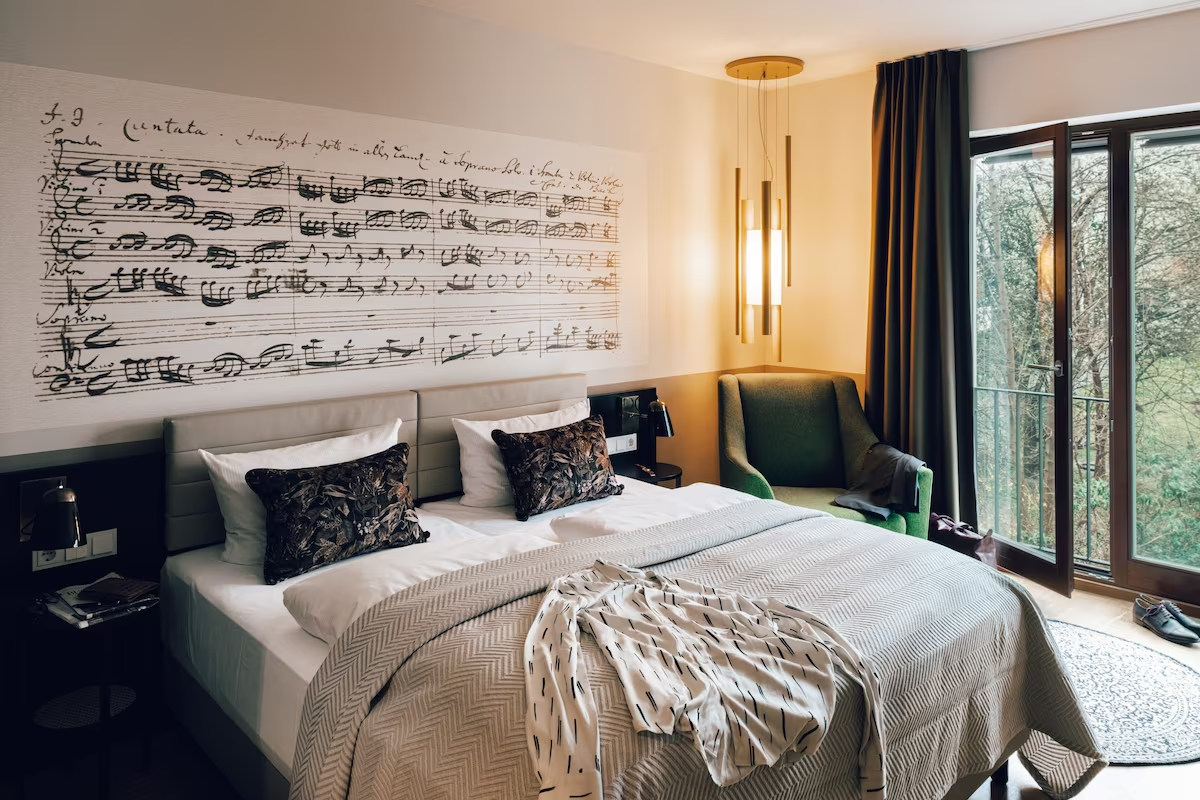
Vienna Townhouse Bach Leipzig
An updated Renaissance-period building with 52 apartments decorated in tribute to J.S. Bach. Most rooms have a kitchenette. On-site, you will find a restaurant, event spaces, fitness facilities, and a sauna.
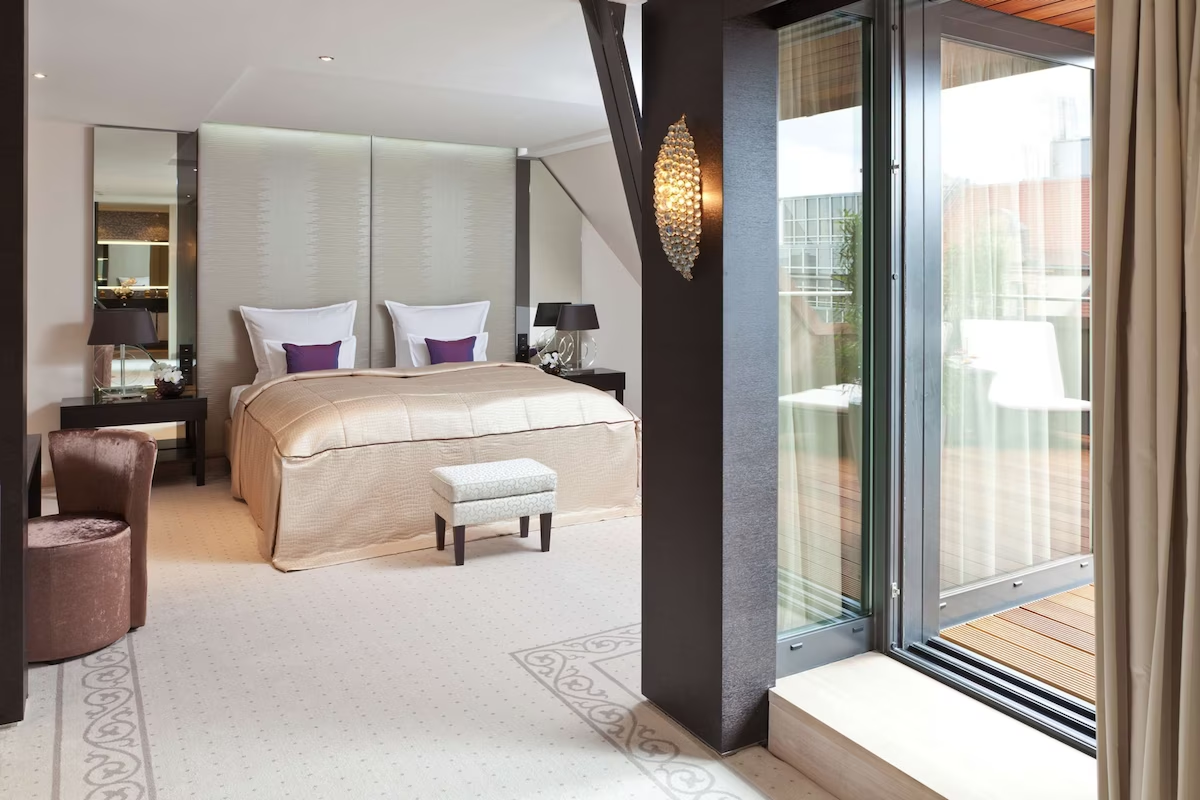
Steigenberger Icon Grandhotel Handelshof
Centrally located luxury hotel in the heart of Leipzig. The rooms are spacious with a great view. On-site guests will find a gym, spa, sauna, as well as a restaurant and bar.
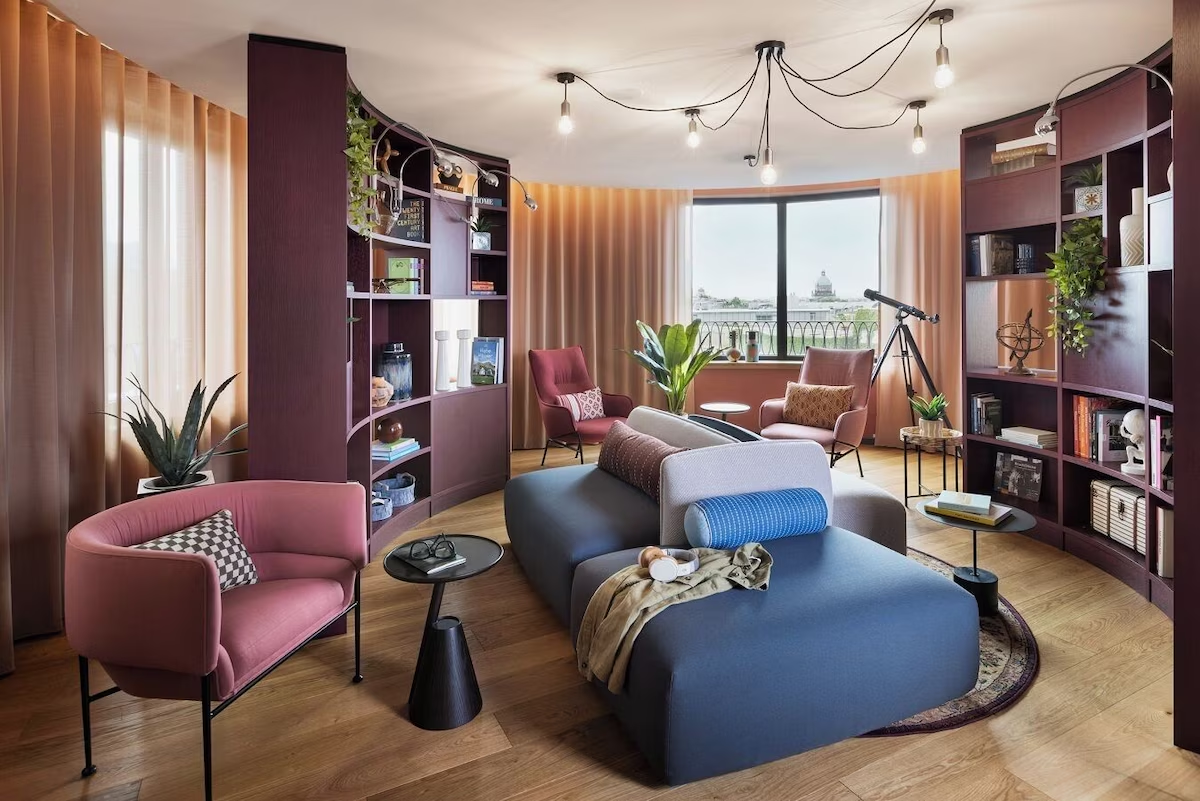
Stay KooooK Leipzig City
Aparthotel close to major attractions and the city centre. The rooms are modern, with fun decor, and some have a kitchen. This property has a rooftop garden, laundry room, on-site cafe & bar, and a library.
Find more hotel options for your trip