Where colonial architecture meets coastal roads and vintage taxis chase the sea: a sensory journey through morning marigolds, South Indian breakfasts, book nooks, iconic Parsi cafes, pavement markets, historic bars, art houses, restorative Ayurvedic massage, and a gaze at the sleepy street cats that guard Mumbai.
Mumbai, India, is a polarising, electric masterpiece—a city you either hate or love, but can never ignore. The first time I found myself here, I didn’t like it. I didn’t like the sticky July heat, I didn’t like the traffic, and I didn’t understand why just being here was reason enough for glee. I didn’t understand the fuss. I thought perhaps, at heart, my being a small-town girl had something to do with it. It has taken a husband from Mumbai and many unavoidable visits to truly decode it. Today, I see it for what it is: an undeniably brave, intelligent, and fiercely fast metropolis, yes, but one that doesn’t demand any conformity. There is a genuine warmth here, endless room for discovery, and the freedom to simply be yourself. Follow me on this part love letter and part guide to Mumbai.
This article might contain affiliate links. Read the disclaimer about affiliate links & PR gifting here.


What to see: Coastal highways, gothic spires & Pavement sentinels
To truly see Mumbai is to watch its architectural centuries from the back seat of a vintage kaali-peeli taxi—the iconic black and yellow cab. My journey begins as we glide onto the cable-stayed Bandra-Worli Sea Link, skimming across Mahim Bay before transitioning onto the sweeping new coastal road. Plunging into undersea tunnels beneath Malabar Hill, we emerge onto Marine Drive, tracing a seamless southward direction into the city’s old British heart. Driving deeper into the Fort district and around Flora Fountain, the streets turn theatrical with dramatic Victorian Gothic and Art Deco structures. The crowning jewel is Chhatrapati Shivaji Terminus—a breathtaking cathedral of commerce defined by its majestic Gothic spires reaching into the sky.
Cutting eastward, the journey reaches its architectural crescendo at the sea, where we cruise past the grand arches of the Gateway of India and the neighbouring Taj Mahal Palace hotel. Yet, looking past the sheer magnitude of this city, the exuberance of a simple taxi ride truly transports me to its centre. Looking up at these historic marvels, I realise how much has been lost to time. But as the heavy tropical heat drops and night takes over, the scene shifts. The sleepy street cats of Mumbai, who spent the afternoon lounging perfectly still on sun-baked stone ledges, are now wide awake. Their bright eyes glaze in the dark, and I secretly believe they guard this historic city—our pavement sentinels, watching silently over Mumbai’s relentless, beautiful chaos.


Where to eat: From morning marigolds to iconic Parsi cafes & Historic bars
Mumbai’s culinary landscape can create a sensory punctuation, but to me, it shifts seamlessly from traditional morning rituals to modern flavours. The journey begins before the city fully wakes. While vendors begin setting up at 4:00 AM, we arrive by 5:00 AM at the relentless Dadar Flower Market. My father-in-law and my daughter join me for a fun day. Wading through the labyrinth of damp lanes, we watch vendors toss mountains of vibrant orange marigolds alongside pastel roses, velvety red lotuses, and fragrant white mogra (jasmine), while a nearby knife sharpener hones his blades. Just past the street sellers, wholesale stalls reveal Mumbai’s broader trade in premium blooms, stacked with imported Thai orchids, vibrant anthuriums, delicate lisianthus, structural birds of paradise, and elegant lilies.

Along the pavement, we pick up a handful of crisp, local white jamun (plums) from a fruit vendor—a refreshing, pale-pink luxury perfectly in season. The fragrant morning rush stirs an appetite, leading us straight into the neighbouring Matunga area to eat breakfast together. At the legendary Café Madras, we join the shared-table crunch of early risers, washing down impossibly fluffy idlis (rice cakes) and savoury upma (semolina porridge) with steel tumblers of frothy, chicory-laced filter coffee while my father-in-law shares stories of a 70s Mumbai.
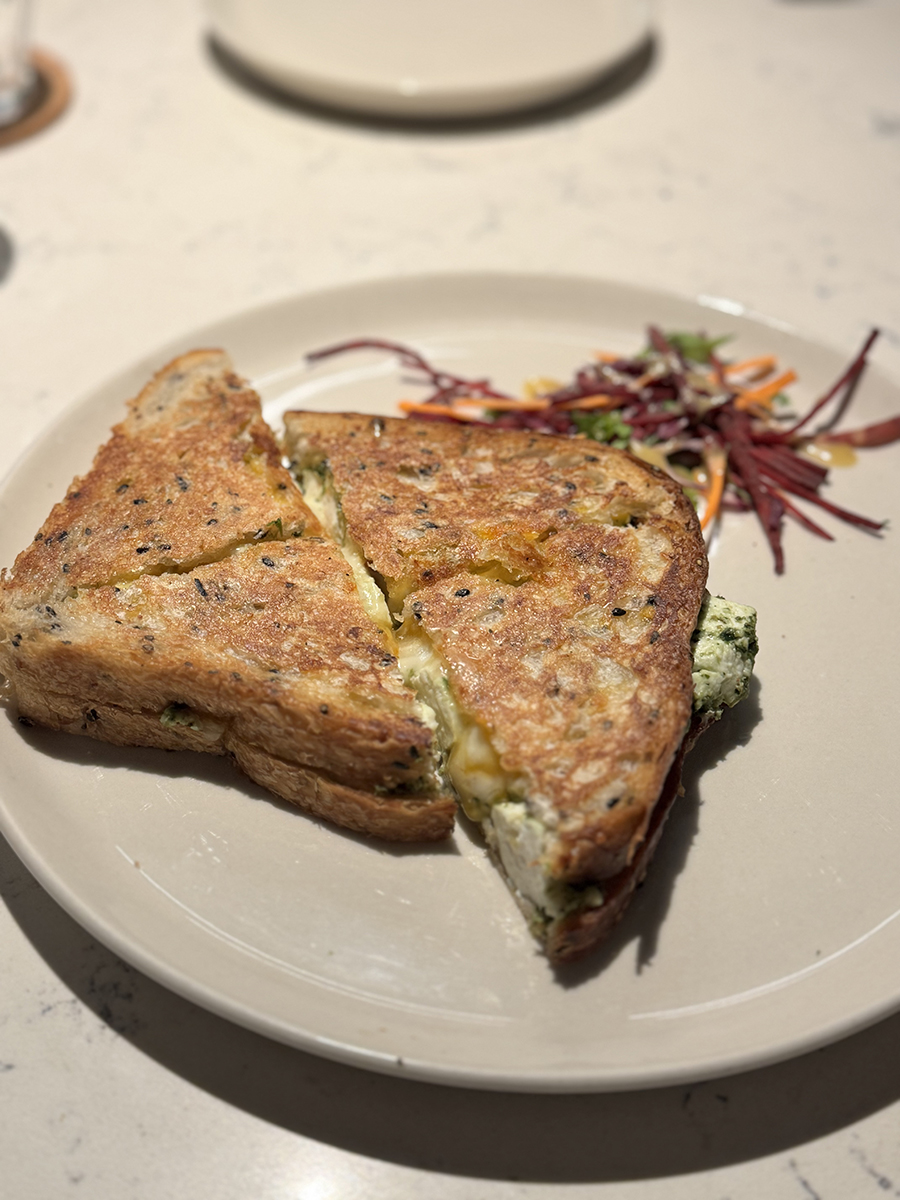
For a design and caffeine reset, we later head to Bandra, slipping into Boojee Cafe to sip a hot latte alongside a grilled cottage cheese sandwich slathered in fiery theecha chutney—a brilliant, modern homage to local Maharashtrian spice.
By afternoon, our trajectory bends toward heritage, highlighting Mumbai’s classic Parsi dining scene. The Parsis—a Zoroastrian community that migrated to India from Persia centuries ago—profoundly shaped the city’s food culture through their welcoming cafes. At Britannia & Co., housed within the grand, Renaissance-style stone facades of Ballard Estate, we sit beneath whirring vintage ceiling fans to devour their iconic, tart-sweet berry pulao (sweet-and-sour rice dish). We pair the rice with comforting dhansak (curry) and crispy veg pattice, scooped up with soft pieces of bread. To drink, we pop open bottles of Pallonji cream soda, a sweet, fizzy Parsi beverage staple, before finishing the feast with a rich slab of lagan nu custard (traditional Parsi wedding dessert). As the evening cools and the sea breeze rolls into Colaba, our final stop is Cafe Mondegar. Under its irreverent, retro murals, we find the ultimate urban antidote: a comforting plate of pasta, a cold beer for me, and a front-row seat to the chaotic theatre of the Mumbai night. For a midnight treat, we pre-order a moist chocolate walnut brownie by unconventional baker Tushar Toprani of 1401 Bakery.


Left: Dosa and side dishes, image by Alaap D. Centre: Cafe Mondegar, image by Rushikesh Patil. Right: Theecha sandwich from Boojee Cafe, image by Nupur Singh.
Where to shop: From high-end artisanal craft to pavement alleys
When shopping in Mumbai, you can make it your own cinema production, transitioning from high-ceilinged sanctuaries to the wonderful wild theatre of the streets. Step off the busy pavements directly into Swadesh at Churchgate—a magnificent, experiential retail flagship housed inside the historic Art Deco Eros Cinema building, which showcases the pinnacle of Indian craftsmanship. Here, under pristine gallery lighting, run your hands over intricate handloom textiles, delicate rosewood woodwork, masterful hand-carved marble inlay decor, and timeless, heritage-inspired jewels.
Plunge back into the sunlight and the roaring street-side energy. Around the grand arcades of Flora Fountain, legendary book carts form towering pavement labyrinths of ink and paper. If you don’t find your literary treasure there, a quick trip up to the pavement book displays at Matunga East reveals even more hidden, second-hand gems. For a complete sensory shift, flag down a taxi to Colaba Causeway. This bustling strip is the ultimate street bazaar, crammed with stalls showcasing heavy silver, oxidised jewellery, eclectic trinkets, and rows of brilliant, quirky street magic tricks and souvenirs. Street shopping here means engaging in a time-honoured, witty dance of negotiation to curate your own chest of treasures.
Your personal checklist should weave together the absolute best of both worlds: high-craft investments from Swadesh like exquisite pattu (silk) weaves, Chikankari fabrics, handmade silk shawls, hand-carved marble coasters, bone-inlay trinket boxes, and heritage-inspired jewellery pieces. Pavement paperbacks consisting of rare, out-of-print classic novels or vintage history books fished from the stacks at Flora Fountain or Matunga East; and kitsch souvenirs from Colaba Causeway, including chased silver earrings, thick oxidised cuffs, vintage-style brass trinkets, neon-bright smartphone cases, and quirky beaded bags.


Left: Flora Fountain, Mumbai, image by Ayush Kamath. Right: Gateway Of India, image by Deeya Rustum.
Last hurrah: Way to the airport
Before heading to the terminal for our flight home, we make one final, essential suburban pilgrimage to Radhe Krishna in Vile Parle. Because Vile Parle sits right next to the airport, we purposely kept this delicious stop for the very end of our journey. Here we order a legendary plate of richly spiced pav bhaji (spicy vegetable curry) doused in Amul butter and scooped up with warm, pillow-soft buttery pav. Beside it sits a golden, crisp masala dosa, a completely separate masterpiece that arrives with cool coconut chutney, a fiery spicy tomato chutney, and a bowl of steaming sambar goodness (lentil-based vegetable curry). Our journey concludes seamlessly near the airport at the Courtyard by Marriott Mumbai International Airport, where I slip away into the serene sanctuary of Ode Spa. Succumbing to a deeply restorative 45-minute full body massage followed by a relaxing bath, the frantic rhythm and beautiful chaos of the streets dissolve completely. I step out entirely reset, smelling of cedarwood and sandalwood, already sketching our next trip back in my mind before boarding the flight home.